
Artificial intelligence (AI) moved from solving competition puzzles to producing real mathematical research. AI systems disproved decades-old conjectures, tackled problems linked to the Riemann hypothesis, and generated machine-verified proofs at unprecedented speed. Yet a deeper challenge has emerged: mathematicians must now learn to understand, trust, and build on proofs no human wrote.
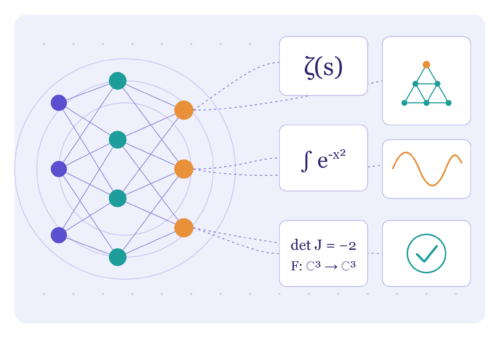
Over the past six months, AI has gone from solving competition puzzles to producing research-level mathematics. Several results would have made headlines even if humans had found them. Here are the main milestones.
The Erdős breakthrough (May). On May 20, 2026, OpenAI announced that one of its internal models had found a counterexample to Paul Erdős’s 1946 “unit distance” conjecture. Quanta called it the first historically significant proof to come from an AI model [1]. The result wasn’t final, and human mathematicians improved on it substantially within weeks. What stood out was that the model brought in ideas from a distant branch of mathematics that nobody had applied to the problem before [1]. Erdős’s list of problems has become a favourite target for AI, and dozens have moved from “open” to “solved.”
The Jacobian conjecture falls (July). On July 19, Anthropic researcher Levant Alpöge used Claude Fable 5 to settle the Jacobian conjecture, which had been open since 1939, by finding a counterexample. By the next morning the result had been checked in the proof assistant Lean. Kevin Buzzard of Imperial College London called it “a big day” [2]. Akhil Mathew of the University of Chicago, who suggested the problem, called the change “very rapid and very unsettling,” especially for junior mathematicians [2].
New models aimed at research (September). OpenAI released GPT-6 Astra and said it produced new results on long-standing problems in high-dimensional geometry, coding theory, group theory, lattice cryptography and combinatorics [3]. MIT’s Andrew Sutherland said Claude’s work showed AI can do “interesting mathematical research,” not just solve problems handed to it [3].
Navier–Stokes and the understanding problem. OpenAI also claimed a solution to a major Navier–Stokes problem in a dense 166-page manuscript. Mathematicians think the proof is technically correct but find it very hard to learn from. Oxford’s James Maynard said extracting human understanding from it had been “very difficult” [4]. Some also noted that human researchers had been closing in on the answer themselves [4].
The October “proof dump.” On October 6, OpenAI released several hundred results at once. The most celebrated was a proof of a “quasi-Riemann” hypothesis, a weaker form of the Riemann hypothesis. Stanford’s Jared Duker Lichtman called it the most significant AI-for-math achievement so far, though the write-up was poor [5]. The same release claimed to settle Hilbert’s 10th problem for rational numbers [6]. On October 26, OpenAI followed with three more claims [6]:
- a proof of the local smoothing conjecture in all dimensions, verified in Lean, which would also imply the Kakeya conjecture
- a disproof of the Exponential Time Hypothesis in computer science, which Anthropic matched hours later
- a 1,147-page consistency proof for a quantum field theory, held back while physicists review it
Machine-checked proofs (autoformalization). AI systems that translate ordinary proofs into machine-checkable code improved sharply over the summer of 2026 [7]. Axiom Math announced formalizations of large bodies of mathematics, including parts of the Stacks Project and the Weil conjectures. Helfgott’s proof of the ternary Goldbach conjecture was formally verified on November 10. Anthropic reported that a formalization job that took 11 days in September now takes 30 hours [7]. This matters because it lets AI check its own work.
Limits and pushback. AI isn’t good at everything yet. In the search for elliptic curves of record rank, it helped find thousands of curves of rank 30 and 31, but the effort also showed where current systems fall short [8]. The First Proof project found that frontier models still write up and cite results poorly [5]. Many mathematicians are uneasy about what all this means for training, credit and the future of the profession [9]. A Harvard report by 32 mathematicians suggested departments rethink how they evaluate research plans for hiring and promotion [6].
Bottom line: In 2026, AI went from helpful assistant to a source of major results. The open question now is less whether AI can prove theorems than whether people can understand, check and build on what it produces.
Sources
[1] Quanta Magazine: Why the Legendary Erdős Problems Are Falling to AI
[2] Fortune: AI solves the Jacobian conjecture
[3] Axios: AI is changing math
[4] NPR: AI solved one of math’s hardest problems. Humanity learned nothing (so far)
[5] Quanta Magazine update: AI proof of the quasi-Riemann hypothesis
[6] Quanta Magazine update: OpenAI’s October 26 results, Harvard report
[7] Quanta Magazine update: AI’s ability to “autoformalize” proofs
[8] Quanta Magazine update: Race to find high-ranking curves
[9] SCMP: As AI solves maths puzzles faster than humans, mathematicians face uncertain future

